The phone usually rings before she's ready to say her name.
There's a pause on the other end—just long enough for me to know this call took courage.
As an admissions director, I've learned to listen not just to words, but to silence. And when a woman calls asking about gambling treatment, the silence often tells me more than anything else.
Many women don't come to treatment because they've "hit rock bottom" in the way people imagine. They come because something quietly became unbearable. A secret credit card. A bank account she doesn't check anymore. A knot in her stomach every time her phone lights up. Shame layered on top of responsibility—kids, partners, parents, careers. She's held everything together for so long that asking for help feels like the one thing she shouldn't need.
So when she finally does call, it matters how we meet her.
---
## The Weight She's Carrying
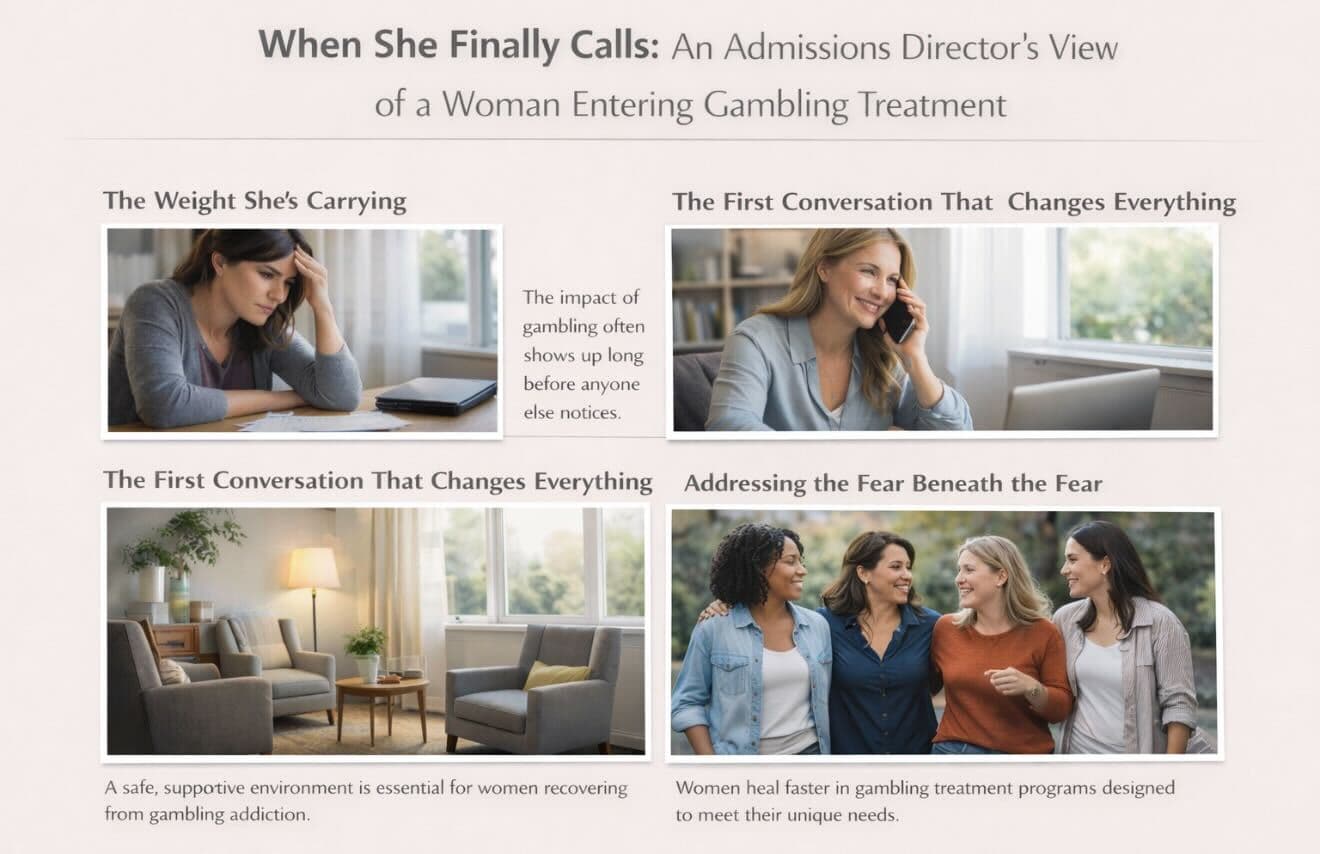
Women entering gambling treatment often arrive carrying a unique kind of isolation.
Gambling disorders in women tend to be quieter, more hidden, and more deeply tied to emotional survival. Many aren't chasing thrills—they're chasing relief. Relief from anxiety, loneliness, trauma, grief, or the relentless pressure to be everything for everyone.
By the time she reaches admissions, she's usually already convinced she has failed. Failed her family. Failed herself. Failed at controlling something she believes she should have been able to handle.
My job in that first conversation isn't to assess her finances or count losses. It's to help her understand that what she's experiencing is a treatable condition, not a personal flaw. That her brain adapted to something that once worked—until it didn't.
And that she's not alone.
---
## The Moment the Guard Comes Down
There's often a turning point in the call. It might come when I say, "You're not the first woman who's told me this," or when I explain how common it is for gambling to escalate quickly once it becomes a coping mechanism. Sometimes it's simply when I slow down and stop rushing her toward logistics.
That's when the emotion breaks through.
Tears. Anger. Exhaustion. Relief.
Women frequently apologize for crying. I always tell them the same thing: This is exactly where you're allowed to do that.
Admissions isn't just an intake process—it's the beginning of repair. For many women, it's the first time they've spoken the truth out loud without trying to minimize it or make it sound "not that bad."
---
## Addressing the Fear Beneath the Fear
The questions she asks aren't really about schedules or insurance. They're about safety.
- Will I be judged?
- Will anyone understand why I gambled?
- What will happen to my family if I step away?
- Does this mean I'm an addict forever?
Women often worry about being seen as irresponsible or selfish. Many fear that treatment will strip them of their identity as caregivers or professionals. Part of my role is to reframe treatment not as abandonment of responsibility—but as the most responsible choice she can make.
We talk about confidentiality. About gender-responsive care. About trauma-informed therapy. About rebuilding trust with herself before trying to repair everything else.
And I'm honest. Recovery isn't quick or easy. But it is possible—and I've seen women rebuild lives they once thought were permanently broken.
---
## Why Gender Matters in Gambling Treatment
From an admissions perspective, one of the most important things I communicate is that women benefit from environments where they don't have to explain or defend their experiences. Many women with gambling disorders also have histories of trauma, anxiety, depression, or relational loss. Treatment must honor that complexity.
When women feel safe, understood, and respected, they engage differently. They open up faster. They stay longer. They heal deeper.
I've watched women arrive guarded and ashamed—and leave with clarity, boundaries, and a renewed sense of agency. Not because we "fixed" them, but because we gave them space to reconnect with parts of themselves that gambling slowly took over.
---
## The Courage It Takes to Walk Through the Door
I never forget that admissions is often the hardest step. Before therapy. Before groups. Before healing. Picking up the phone means admitting something has gone too far—and trusting a stranger to respond with care.
When a woman enters gambling treatment, she isn't weak. She's brave in a way that doesn't get enough credit. She's choosing to face discomfort instead of numbing it. She's choosing honesty over secrecy. She's choosing herself—sometimes for the first time in years.
And from where I sit, answering that call day after day, I can say this with certainty:
The moment she reaches out isn't the end of her story.
It's the beginning of a much stronger one.